What is Brand Bidding In PPC?
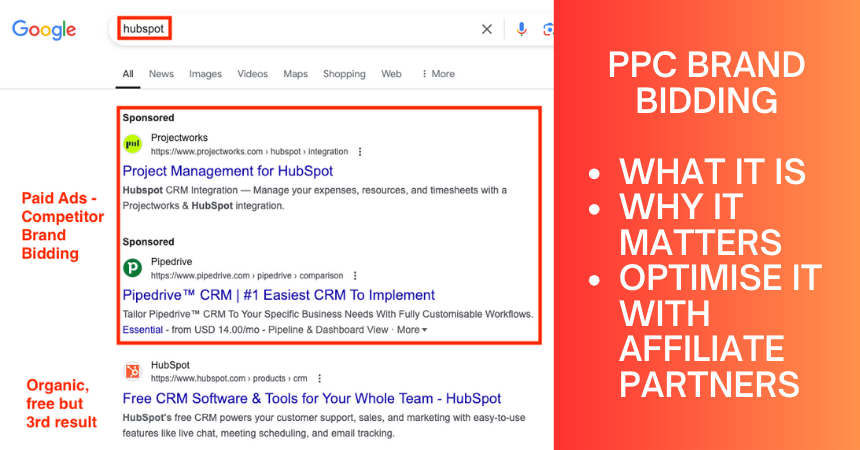
Brand bidding in PPC advertising refers to the practice of bidding on your own brand name or branded keywords in the paid results of search engines like Google or Bing. When you bid on your branded terms, your ads appear at the top of search results when users search for your company or product name. This can include variations of your brand, such as abbreviations, common misspellings, or brand slogans.
Why Should You Do Brand Bidding?
Brand bidding can help protect your brand from competitors who may be targeting your branded keywords, especially if they’re running campaigns on your brand terms to redirect potential customers to their own website. By bidding on your own brand name, you can ensure that your official site appears at the top of the search results, even if competitors are also bidding on your brand. Brand bidding also provides a way to control the messaging that potential customers see and reinforces brand visibility. Brand bidding is commonly seen in highly competitive markets especially in SaaS where companies will often target competitors keywords with a strong offer geared create interest if the core brand isn’t covering off that area. In some searches the organic results can be sitting below the “local pack” which are the maps listings which means that it can be quite a bit of scrolling for a potential customer before they see the organic results.
Some key reasons to consider brand bidding:
- Protect Brand Visibility: Prevent competitors from capturing traffic intended for your brand.
- Increase Click-Through Rate (CTR): Brand searches tend to have high CTRs, which can improve your account’s overall quality score and relevance.
- Control Brand Messaging: Directly control the message users see when they search for your brand.
- Complement SEO: Organic listings may not always be enough to capture attention, especially on mobile where ads are often shown first.
- Use ad extensions such as sitelinks, or a phone number right from the search results.
Pros and Cons of Brand Bidding
Pros:
- Higher Conversion Rates: Users searching for your brand are likely already interested, leading to higher conversion rates.
- Defensive Strategy: By bidding on your own brand, you can prevent competitors from redirecting traffic from users who are searching for your products or services.
- Enhanced Brand Authority: Appearing at the top of both organic and paid search results increases your brand’s credibility and visibility.
- Keyword Insights: Provides valuable insights into how people are searching for your brand, which can help shape marketing strategies.
Cons:
- Cost of CPC: Bidding on your own brand name can seem wasteful, especially if you have a strong organic presence that already appears in the top spot.
- Cannibalisation of Organic Traffic: Your PPC ads might take away clicks that would otherwise have come through organic search, potentially increasing costs unnecessarily.
- Increased Spend if Competitors Target Your Brand: If competitors are also bidding on your brand, CPCs can be driven up as you compete for the same search terms.
- Complex Management: Brand bidding campaigns require careful management, especially if affiliate partners are also bidding on your brand keywords.
Managing Brand Bidding with Affiliate Partners
If you work with affiliate partners, managing brand bidding becomes more complex. Without clear guidelines, affiliates may bid on your brand keywords and compete with your own ads, which can drive up CPCs and reduce your overall ROAS. Here are some strategies to manage brand bidding with affiliate partners:
- Set Clear Guidelines in Contracts: Specify in affiliate contracts whether affiliates are allowed to bid on branded keywords, and if so, under what conditions.
- Use Negative Keywords: If you allow affiliates to bid on your brand, consider using negative keywords in your own campaigns to avoid competing directly.
- Monitor Affiliate Activity: Regularly check search results to ensure affiliates are following the guidelines you’ve set.
- Restrict Certain Terms: You may allow affiliates to bid on long-tail branded keywords (e.g., “[brand] discounts”) but restrict bidding on core branded keywords (e.g., just “[brand name]”).
- Use a Third-Party Monitoring Tool: Tools like BrandVerity or Adthena can help monitor who is bidding on your branded terms and alert you to unauthorised activity.
Guidelines and Best Practices for Optimising Brand Bidding in Paid Ads
- Leverage Ad Extensions: Use ad extensions to maximise visibility and provide more information about your brand. This includes but isn’t limited to sitelink extensions, callouts, and structured snippets.
- Customise Ad Copy for Brand Searches: Use the opportunity to reinforce your brand messaging and provide unique offers or information to capture interest. We’ve found that having a very strong offer will increase CTR and performance especially when brand bidding against aggressive competitors.
- Monitor and Adjust Bids: Depending on the competition and your budget, adjust your bids to balance cost with the value of the traffic you’re capturing. The great news here is that as it’s your brand you should already have a high quality score which means the platform will opt to show your ads rather than the competitions even if they are bidding slightly higher. This overall means more clicks at a significantly lower cost.
- Run A/B Tests: Regularly test different ad copies, extensions, and bidding strategies to determine what resonates most with users searching for your brand.
- Evaluate ROI Regularly: Track conversions from brand bidding campaigns to ensure they’re delivering a positive ROI, especially in terms of additional value over organic listings. You will need to understand this holistically depending on if you are doing this offensively or defensively as the ROI calculations are not demand driven like some other search terms. You should also consider extended the conversion window for these campaigns as there could be a number of people in the higher stages of the funnel or customer journey.
- Optimise Landing Pages: Ensure that brand ads lead to relevant landing pages that can effectively convert brand-search traffic. The offer and messaging MUST match the ad copy for the best results. Do not have a great ad that leads to a poorly designed landing page, you should be implementing best practise as the landing page is the second half of the battle. There are some great free tools that you can access to assess the user experience which include Google Analytics (tracking users on the site), Microsoft Clarity (heat mapping and user session recording), as well as many more.
In Summary
Brand bidding can be a highly effective strategy in PPC advertising, especially for protecting your brand from competitors and reinforcing brand visibility. However, it’s essential to weigh the pros and cons, particularly when it comes to costs and potential cannibalisation of organic traffic. For businesses working with affiliates, managing brand bidding becomes even more critical, requiring clear guidelines and monitoring tools. By following best practices, you can maximise the effectiveness of brand bidding, helping to increase brand recognition and conversions.
With the right approach, brand bidding can be an invaluable part of a comprehensive PPC strategy, contributing to both defensive and offensive marketing tactics.
Need help with your PPC advertising? Talk to an expert today and get a 100% free audit delivered via recorded video!